
Admit I
Stylophone S-1 with carry case
First-time players who like a tidy kit
| Range | 3 octaves |
|---|---|
| Effect | Vibrato |
| Power | 3 × AA, not included |
| In the box | Fitted carry case |
4.6/5 on Amazon from 291 ratings
See it on Amazon
Strictly a British invention
The Stylophone is a stylus-played pocket synth invented in Britain in 1967, and it has been surprising the right people ever since. We compare the pocket models with the Beat, the Theremin and the desktop DS-2.
By Rhys Entwistle, updated 4 November 2026
An independent site with no connection to Suzuki, Meloclub or Dubreq: not official, not an authorised dealer. Omnichord and Stylophone are trade marks of their owners, named here only to identify the real products.
Act I
Brian Jarvis invented the Stylophone in 1967, and Dubreq, a British company, put it into the shops. The listing for the Original dates its first release to 1968, which is a year of difference that nobody has ever argued about at length.
David Bowie used one on Space Oddity in 1969, which did more for its reputation than any advertisement could, and Dubreq relaunched it in 2007. It remains a British invention that still sounds like one: buzzy, brisk and slightly amused.
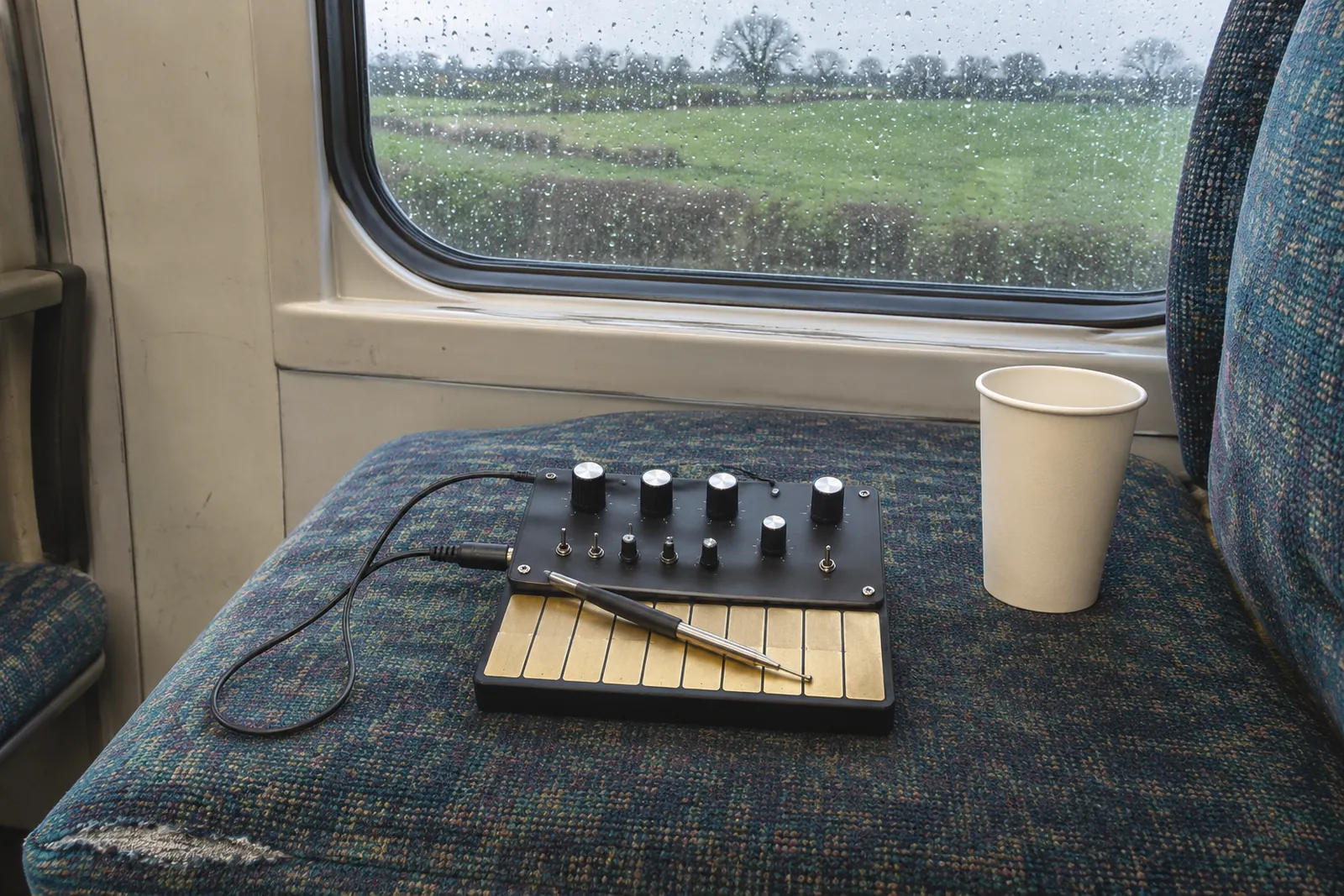
A Stylophone has a metal keyboard and a stylus on a lead. Tap the stylus on a segment to sound a note, or slide it along to run from one to the next. There is no wrong pressure, only a wrong segment.
Dubreq’s 2007 relaunch brought the instrument back to a generation that had only heard about it, and the range has grown steadily since. A Stylophone is no longer one gadget but a small family with some very different members.
The listings claim the same iconic analogue sound as the first model, and the voice is unmistakable: a buzzy single note that sounds like a comedy and a hit single at once. There is one voice, and the character comes from how you play it.
Act II
Four pocket models share the stylus and the metal keyboard, and they differ in speakers, effects and extras. Order is our ranking for a first purchase.
| The act | Best for | Rating | Where |
|---|---|---|---|
| Stylophone S-1 with carry case | First-time players who like a tidy kit | 4.6/5 | Amazon |
 Stylophone Original Pocket Synthesizer | Anyone wanting the classic stylus synth in a pocket | 4.6/5 | Amazon |
 Bowie Stylophone limited edition | Bowie fans who enjoy a surprise finish | 4.6/5 | Amazon |
 Stylophone Stylosette mini synth | Tinkerers who like a cassette-styled pocket synth | 4.3/5 | Amazon |
Admit I
Stylophone S-1 with carry case
First-time players who like a tidy kit
| Range | 3 octaves |
|---|---|
| Effect | Vibrato |
| Power | 3 × AA, not included |
| In the box | Fitted carry case |
4.6/5 on Amazon from 291 ratings
See it on AmazonAdmit II
Stylophone Original Pocket Synthesizer
Anyone wanting the classic stylus synth in a pocket
| Power | 3 × AA batteries |
|---|---|
| Width | Under 12 cm, claimed |
| Output | 3.5 mm stereo line connection |
| Played with | Stylus on metal keyboard |
4.6/5 on Amazon from 11,100 ratings
See it on AmazonAdmit III
Bowie Stylophone limited edition
Bowie fans who enjoy a surprise finish
| Finish | Logo or Classic, supplied at random |
|---|---|
| Modes | 3, synth and bass sounds |
| Power | Batteries |
| Size | 18 × 10.6 × 4.6 cm |
4.6/5 on Amazon from 1,500 ratings
See it on AmazonAdmit IV
Stylophone Stylosette mini synth
Tinkerers who like a cassette-styled pocket synth
| Range | 3 octaves |
|---|---|
| Effects | Delay and vibrato |
| Power | 2 × AAA |
| Extras | Expansion port and clips |
4.3/5 on Amazon from 183 ratings
See it on AmazonThe S-1 is listed as a recreation of the 1968 classic, with three octaves, a vibrato effect, a built-in speaker with volume control and a 3.5 mm socket for headphones. A fitted carry case is included, and the batteries, three AA, are not.
The Original is the plainer pocket model, claimed to be under 12 cm wide, powered by three AA batteries and connected to other gear by a 3.5 mm stereo cable. The listing describes the same analogue sound as the first one.
This limited edition comes in a white design with an embossed Bowie logo, or in a rare Classic grille, and the listing says the finish is supplied at random. It has three modes for classic analogue synth and bass sounds, and it is battery-powered.
The Stylosette is styled like a cassette, a little over 10 cm wide, with a three-octave range, delay and vibrato effects and two AAA batteries. The listing adds an expansion port and clips for triggering sounds from conductive objects such as fruit, vegetables or spoons, and we will leave the fruit bowl out of this.
Act III
Three further models stretch the idea beyond a plain pocket synth. Each has its own listing and its own purpose, so read the title before buying.

Admit I
Stylophone Beat drum machine
Players building loops and rhythms with a stylus
| Drum kits | 4 |
|---|---|
| Bass sounds | 4 |
| Recording | Layers and patterns |
| Power | 3 × AA, not included |
4.5/5 on Amazon from 1,500 ratings
See it on Amazon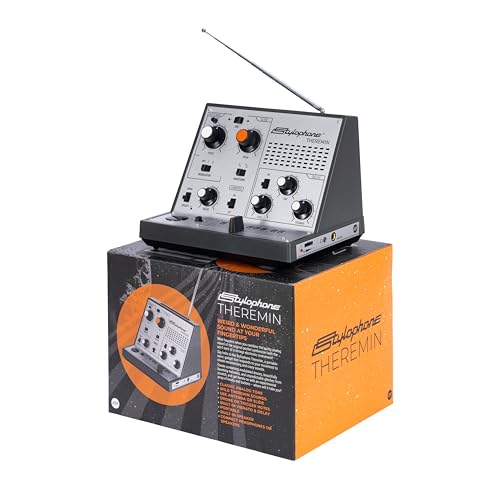
Admit II
Stylophone Theremin touch synth
Players who want drones and trigger notes by touch
| Modes | Drone or trigger notes |
|---|---|
| Effects | Vibrato and delay |
| Sound | Built-in speaker |
| Output | Headphones and other gear |
4.4/5 on Amazon from 112 ratings
See it on Amazon
Admit III
Stylophone CPM DS-2 drone synth
Sound designers after a desktop analogue drone synth
| Oscillators | 2 analogue 3340, 2 sub |
|---|---|
| Filters | 2 analogue 3320 |
| Patching | 12 points, Eurorack compatible |
| Power | Mains or 6 × AA |
4.7/5 on Amazon from 21 ratings
See it on AmazonThe Beat is a compact stylus drum machine with four drum kits and four bass sounds. It has a click track and tempo lock, records several layers and patterns, and has a built-in speaker with volume control, on three AA batteries.
The listing describes a touch-sensitive synthesizer that can drone or trigger notes, with vibrato, delay and a speaker. It is played by touch, so it is not strictly a theremin, as our theremin page explains.
The CPM DS-2 is a bigger desktop analogue drone synth, with two 3340 oscillators, two sub oscillators, two 3320 filters, 14 LFO waveforms and 12 modular patch points. It runs on mains or six AA batteries, and the listing says it is Eurorack compatible.
Act IV
A Stylophone looks like a keyboard and behaves like a pen, and the differences show up fast. A single stylus plays one note at a time, so chords are someone else’s department.
Act V
Every Stylophone here makes its own noise, and most can also send it elsewhere. The sockets differ, so it helps to read the list before buying a cable.
Act VI
Batteries are the usual catch, since the S-1 and the Beat do not include any, and the Stylosette needs AAA rather than AA. Check what is in the box before the first session.
Act VII
A Stylophone rewards a light touch and a short rehearsal, and the first tune can arrive within minutes.
Start with a nursery tune, a hymn or the opening of a song you know well, because familiar notes make the stylus easier to aim. Anything with a strong melody and few leaps will do.
The Beat records several layers and patterns, so you can build a loop one part at a time, with the click track keeping you honest. Pair it with a pocket Stylophone from the same family and the two make a small band.
The Stylosette’s expansion port and clips are the unusual feature, since they let conductive objects trigger sounds. The listing mentions fruit, vegetables and spoons, so the instrument turns the kitchen drawer into a keyboard.
If keys feel more natural, the Omnichord adds chords and rhythms, and the otamatone offers a different sort of finger slide.
Encore
Brian Jarvis invented it in 1967, and the listing for the Original dates its first release to 1968. Dubreq, the British company behind it, relaunched the instrument in 2007.
David Bowie played one on Space Oddity in 1969, which remains the standard answer. The listing for the Original also names The White Stripes among its users.
The Stylophone, more or less. You touch a stylus to a metal keyboard, and each segment of the metal sounds a note, though the stylus is not a pen and will not write.
Yes. The Original connects with a 3.5 mm stereo cable into a line input, and the S-1 has a 3.5 mm socket for headphones and connections. The Beat and the Theremin take headphones too.
Not quite. The Beat is a compact stylus drum machine with four drum kits and four bass sounds, so it belongs beside the synths rather than among them.
The S-1 is the tidy choice: it adds a carry case, vibrato and a speaker with volume control to the classic design. The Original is the plainer way in.