 Omnichord
 Stylophone
 Otamatone
 Theremin
 Autoharp
 Kalimba
 Jaw harp
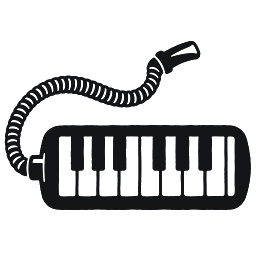 Melodica
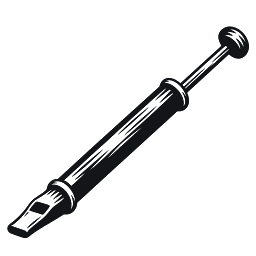 Swanee whistle
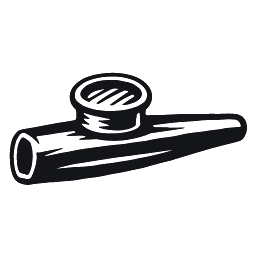 Kazoo
 Tongue drum
 Handpan

Admit I
Otamatone Regular, white
Anyone who wants the classic singing quaver
| Model | Regular |
|---|---|
| Colour | White |
| Played by | Sliding the stem, squeezing the cheeks |
| Type | Touch-sensitive electronic |
4.1/5 on Amazon from 16,300 ratings
See it on Amazon

Twice nightly, and on Sundays by request
A fine selection ofnoises you did not ask for
Weird instruments are the ones that make people ask what that is, then ask to have a go. Our bill runs from the Omnichord to the kazoo, and every act on it can be bought.
By Rhys Entwistle, updated 4 November 2026
Act I
The programme above sorts our weird instruments by how they make their noise: electric, plucked, blown and struck. Every name is a page of its own, written from the listings, with the small print read so that you need not.
Interval
Three questions from the compère. Answer honestly: the neighbours will find out anyway.
The full bill: 12 acts.
Act II
Weird instruments are not defined by obscurity alone, because plenty of obscure instruments are perfectly dignified. The weirdness lies in a mismatch between what an instrument looks like and what it does, or in how little it asks of you before it makes a sound.
An otamatone is a quaver with a face, and an Omnichord is a lap-board with chord buttons and a strumming plate. Weird musical instruments often look like something other than an instrument, which is half the charm and most of the reason people stop to ask.
A theremin is played without touching it, a kazoo by humming into it, and a jaw harp by turning your head into the speaker. Strange musical instruments of this kind rearrange the usual relationship between player and noise.
The swanee whistle spoke for the Clangers and the melodica sat in the school cupboard, and both carry a reputation that no maker planned. Weird instruments gather history the way other objects gather dust.
Some instruments sound unlike anything else in the house, and nobody can fail to notice when one starts. Unusual musical instruments of that sort need the least introduction and the most warning.
A Stylophone fits a coat pocket, an Omnichord wants a lap and an autoharp wants a table. These instruments rarely come in the dimensions you would expect, and the Deluxe otamatone is a good deal larger than its cute cousins.
Our rule of thumb is simple: if the instrument can be explained in one sentence and still gets a reaction, it qualifies for the bill.
Act III
Choosing weird instruments for a comparison site means being strict about what counts, because the category could swallow anything with a string. We pick instruments that people actually buy, that arrive in a box and that can be explained in a breath.
Within each page, we compare models by what the listing says, and where a figure is the seller’s claim, we say so. Nothing earns points for being strange, only for being worth playing.
Our weird instruments pages draw on the makers’ listings, the specifications they publish and facts about each instrument that are well established. Where a seller makes a claim, the page says it is claimed, and where a fact is missing we leave it out.
We leave out figures that change from day to day, such as stock levels and offers, because they are out of date before the page is read. Where stock is scarce, we say so in plain words and send you to the product page to check.
Act IV
The quickest way into weird instruments is to pick a family and work outwards. Each section below names the pages that belong to it, with a line on why they earned a place on the bill.
The electric family is the largest and the loudest, and it holds the instruments with the most dramatic backstories. Most of these weird instruments run on batteries and will fit in a bag, which is more than can be said for their reputations.
The plucked family is quieter and older, and it rewards a little patience. These weird instruments all make their sound from something vibrating against something else, and the arrangements get inventive.
Blown weird instruments are the ones you find at the back of a British cupboard. They need breath, a little nerve and, in two cases out of three, a cleaning cloth.
Struck weird instruments rely on fingers or mallets and a well-made piece of steel. They are the quietest of the four families to play, and the most photogenic.
Omnichord and Stylophone are trade marks of their owners, and Hang is a trade mark of PANArt. We name them to identify the instruments, and this site has no connection with any of them.
Act V
Weird musical instruments make unusually good presents, because the recipient is guaranteed a reaction and the giver is guaranteed a story. The trick is to choose one that works out of the box and does not need a manual the size of a novel.
Admit I
Otamatone Regular, white
Anyone who wants the classic singing quaver
| Model | Regular |
|---|---|
| Colour | White |
| Played by | Sliding the stem, squeezing the cheeks |
| Type | Touch-sensitive electronic |
4.1/5 on Amazon from 16,300 ratings
See it on Amazon
Admit II
Sondery kazoo, five membranes
Gift givers wanting a pouch and lanyard
| Body | ABS |
|---|---|
| Membranes | Five |
| Extras | Lanyard, storage pouch |
| Weight | About 50 g |
4.6/5 on Amazon from 1,500 ratings
See it on AmazonThe otamatone is the obvious gift for anyone who likes cute, silly things, and the Regular model works from the first press. Check the model name in the title, since the character editions look different and the Deluxe is far larger.
A kazoo is the opposite of a grand gesture, and that is its virtue. The Sondery model in our list has five membranes, a lanyard and a storage pouch, and it works the moment you hum into it.
Weird instruments also work as presents for groups. A multi-pack of kazoos turns a party into an orchestra, and a swanee whistle, in plastic or in metal and bamboo, turns a quiet table into a cartoon.
For a musician who already has a shelf of gear, the Stylophone or the Omnichord is the safer bet, since each has a story and neither is common. Stock of the Omnichord OM-108 is low on Amazon, so allow time for a search.
Act VI
Weird instruments for adults are a growing shelf, and the grown-up appeal is easy to explain: nobody expects competence, so any progress is a triumph. Several of ours suit an adult with a spare corner and a sense of proportion.
Party instruments need to start instantly and to survive being passed around. The kazoo and the swanee whistle fit that brief, and the otamatone makes a fine second act once the room has warmed up.
Act VII
Strange musical instruments tend to delight children more than the polite ones do, since there is nothing to get wrong. A few cautions apply, and the first is that small parts and small mouths are a poor combination.
Age guidance varies by maker and by listing, so read the age notice on the page before you order.

Admit I
Newlam 17-key kalimba
Readers who like notes embossed on the keys
| Keys | 17 |
|---|---|
| Marking | Embossed letters and notes |
| Weight | About 330 g |
| In the box | Hammer, book, bag, cloth |
4.7/5 on Amazon from 14,300 ratings
See it on AmazonA kalimba suits older children as well as adults. The Newlam 17-key model in our list comes with a tune hammer, an instruction book, a flannelette bag and a cleaning cloth, and eight-key models are the usual beginners’ choice.
Act VIII
Some unusual musical instruments reward an afternoon, and others reward a decade, so it helps to know which is which before you buy. Three of ours make a pleasing noise almost at once.

Admit I
Stylophone Original Pocket Synthesizer
Anyone wanting the classic stylus synth in a pocket
| Power | 3 × AA batteries |
|---|---|
| Width | Under 12 cm, claimed |
| Output | 3.5 mm stereo line connection |
| Played with | Stylus on metal keyboard |
4.6/5 on Amazon from 11,100 ratings
See it on AmazonNone of these three needs lessons, a teacher or a manual, though a short read of the listing will save a battery mishap. They also make the best opening act for anyone nervous about weird instruments.
The theremin has no keys to find and the otamatone has no frets to follow, so both reward patience rather than instinct. The Moog Theremini’s pitch correction takes some of the sting out of the first week.

Admit I
Moog Theremini
Beginners who want pitch correction built in
| Presets | 32 |
|---|---|
| Pitch | Assistive correction, built-in tuner |
| Outputs | Headphone, stereo line, pitch CV |
| Connection | Mini USB, editor software |
4.5/5 on Amazon from 600 ratings
See it on AmazonSome weird instruments come into their own with other people in the room. The autoharp is built for accompanying singers, and the Omnichord carries its own rhythm section, which is more than most guests manage.
Act IX
Buying weird instruments online carries a few hazards that ordinary instruments do not, mostly because the same shape arrives in several sizes and editions. A short checklist spares most of the disappointment.
Low stock is a fact of life with instruments of this sort, since few shops keep many of them. When a page says stock is scarce, check availability, and look twice at third-party sellers before you order.
Names mislead in this corner of the shop. A Stylophone Theremin is played by touch, so it is not strictly a theremin, and a tongue drum can be sold as a garden chime. The title and the listing settle the matter, and our pages say which is which.
Act X
Weird instruments are more useful in a studio than they look, provided you know what each one plugs into. The sockets differ widely, so here is the short version.
| Instrument | What it plugs into |
|---|---|
| Omnichord OM-108 | Mono line out, stereo mini-jack headphone out, MIDI OUT |
| Moog Theremini | Headphone jack, stereo line level outs, pitch CV out, mini USB |
| Stylophone S-1 | A 3.5 mm socket for headphones and connections |
| Otamatone Deluxe | A 3.5 mm stereo jack for headphones, amps and speakers |

Admit I
Suzuki Omnichord OM-108
Chord-minded players who want a strum and rhythms
| Chords | 38 buttons, 108 claimed |
|---|---|
| Strumplate | Four octaves, touch-sensitive |
| Rhythms | 10 styles |
| Size | 45.7 × 25 × 5.2 cm, 1.2 kg |
4.3/5 on Amazon from 26 ratings
Read the full reviewSee it on AmazonAn Omnichord and a Theremini are the two most useful of these weird instruments for recording, since each has proper outputs. The others are better enjoyed live, in the room, with the door open.
Act XI
Weird instruments make a better band than the sensible ones, because nobody expects them to agree. A village hall stage and a table of tea would suit the lineup below, and each member has a job.
| Role | Instrument | Why it fits |
|---|---|---|
| Chords | Autoharp | Bars choose the chord, so a singer can accompany themselves |
| Rhythm and chords | Omnichord | Chord buttons, strumplate and ten rhythm styles in one case |
| Melody | Melodica | A keyboard you blow into, with a long place in British schools |
| Atmosphere | Theremin | Played without touching, so it keeps its distance from the others |
| Comic relief | Kazoo and swanee whistle | Both are easy to start and hard to ignore |
Instruments of this kind work best when each plays one part and then stops, which is a rule that applies to most bands and to very few of the real ones.
Act XII
Space decides more purchases than taste does, and weird instruments vary enormously in how much room they take. The sorting below runs from the pocket to the floor.
Anyone short of space should start at the top of that list. The handpan and the tongue drum are quiet relatives of each other, and the handpan page explains why the grander one asks for more care.
Act XIII
Weird instruments collect names the way coats collect fluff, and the same object can turn up under three titles in three shops. Knowing the aliases saves a good deal of searching.
| Instrument | Also met as |
|---|---|
| Melodica | Melodion when made by Suzuki, Pianica when made by Yamaha |
| Swanee whistle | Slide whistle |
| Kalimba | Thumb piano, and a relative of the mbira |
| Tongue drum | Steel tongue drum, and in some garden listings a rain drum |
| Handpan | Wrongly called a hang drum, since Hang is a trade mark |
| Autoharp | Chorded zither |
A listing’s title usually settles which of these you are buying, so read it twice. Weird instruments can be the same instrument under several names, or several instruments under one.
Some weird instruments owe their fame to classrooms. The melodica sat in British primary-school cupboards for decades, and kazoos are sold in multi-packs for classrooms and parties, which tells you where the demand comes from.
Act XIV
A guide to weird instruments is only useful if it commits, so here is where we would send each sort of buyer. Every choice rests on the listings and on what we know of the instrument, not on anyone’s hands-on session.
We would hold back on anything with a mouthpiece for a child who cannot yet clean it, and on the jaw harp for small children. The odd ones reward judgement more than enthusiasm, and the instruments themselves are patient.
Act XV
Most weird instruments began as serious attempts at something else, which is perhaps why they carry such a dignified air of bafflement. The dates below are the ones we are sure of.
| When | What happened |
|---|---|
| 1882 | Charles Zimmermann patents the autoharp |
| Around 1920 | Leon Theremin builds the theremin |
| 1950s | Hohner introduces the melodica |
| 1967 | Brian Jarvis invents the Stylophone |
| 1969 | The Clangers speak through swanee whistles, and David Bowie records Space Oddity with a Stylophone |
| 1981 | Suzuki launches the Omnichord |
| 2000 | PANArt creates the Hang in Bern |
| 2009 | Maywa Denki and Cube bring out the otamatone |
| 2024 | The Omnichord OM-108 reissue arrives |
The oldest patent on the bill is the autoharp’s, from 1882, and the newest arrival is the 2024 reissue of the Omnichord. Between them lie a century and a half of people trying to make music easier or stranger, and occasionally both.
Not every entry on the bill has a tidy patent date. The jaw harp is far older than any of the dates above, and the kalimba belongs to a family of African lamellophones that Hugh Tracey helped to popularise under that name in the twentieth century.
The pattern across these weird instruments is that the odd ones survive by being fun first and useful second. The theremin outlived the science fiction films it was made for, and the Stylophone outlived its first fashion.
Television did more than any manufacturer to fix these instruments in memory. The Clangers made the swanee whistle a voice, Space Oddity put the Stylophone on a record, and primary-school music made the melodica a shared childhood memory.
Encore
That depends on who is counting. Among instruments you can buy new, the theremin, the otamatone and the Omnichord have the best claim, and each one gets a reaction before it makes a sound.
One that makes people smile before it makes a note. The kazoo and the swanee whistle lead the field, and the otamatone has the advantage of a face.
The theremin comes first, since there is nothing to touch and every note has to be found in the air. The otamatone follows, because its stem has no frets to guide a finger.
Yes, when they make controllable pitches, and most of ours do. The kazoo and the swanee whistle sit at the playful end, but they still reward practice more than their reputation suggests.
The kazoo is the simplest and the Melody otamatone has built-in tunes. The jaw harp is the exception, as it is held against the teeth and is not for small children.
The otamatone Regular works from the first press and starts conversations. The Stylophone and the kalimba are the quieter alternatives, and a kazoo is the modest one.
One can, in a way. Our online chord strip plays in the browser and is free, though it is our own chord strip and not an Omnichord, so it shows the principle rather than the real thing.